If we were sitting down in the same room, and chatting, I'd start with mindset, so that's what I'll do here. And yeah--it's a lot to 'digest'!
This necessary change in diet is tough - but so is feeling awful, and at least with the tough change, feeling better is around the corner.
It's a weeks-long process, so prepare to feel envious of everyone else's snacks, and every time that happens, try to imagine how much better you'll feel without headaches, itchy skin, stomach aches, and those fuzzy thoughts that are hard to concentrate through...feeling grumped out and yucky all over. In my books, no ice cream cone is worth all that nastiness. It's natural to wish for what you don't have, but you'll get better faster if you keep it on the sunny side of the street, so to speak. I use the weather metaphor on purpose, because it feels like coming out of clouds, and seeing everything more clearly, and it truly feels like you're getting sunnier on the inside. I promise. (My kiddos would be able to verify that I hardly ever promise...so I mean it!)I warn about the food envy though, because clouds happen...and every single person I've talked with who's had to go gluten free experiences frustration and envy...but it doesn't have to be the main thing. It's just a thing. I really think it's better to see it as something normal, rather than a failure though, so I am giving you a head's up on that...it's natural, but you can help it pass quickly by focusing on feeling good. Doing a little exercise to prove to yourself that you're strong in both body and mind always, always, always helps. And if you're really, deeply bummed some day - just send me a comment or message, and I'll do whatever I can to help - because I've likely experienced something similar, or talked to someone who has...because now, my parents, and two of my three kids have done it now - and we're all feeling better.
The upside is that stores have beautiful foods for you...fresh, energizing, and healing foods. And participating in the process is a fun part of the getting better. Elimination diets are temporary; but so challenging that I think it's important to grab your fun wherever you can, at least until you're feeling better enough to be ok with it all by knowing how much better you feel.
As for what, where, or how to start...
I like to understand what's happening in the digestive system, so that I better understand how to eat, and why I have to do it this way, so here's a start. I'll call it "the zoo that is you"...Every person is filled with little critters...it's normal, and completely "ew" if you think about it too much, unless it seems cool that we're so interdependent with other life forms... Once you're past "ew" you can get to understanding that the activities that take place during digestion are helped, or hindered, by the types and numbers of the guys in your guts.
There are good ones, who produce vitamins that keep you healthy, and there are some who are indifferent, and there are some who are nasty for you if they get too high in numbers...like Candida albicans. They are naturally present, and we'll not ever get rid of them-we simply have to work at controlling their numbers (which is where what you eat is highly important). Here's what they do, according to an environmental illness website. My super fast summary is this: Candida albicans is a fungus, it takes different forms, when it gets too busy, it starts to really mess with the guts. The website provides a more detailed description.
Candida/Yeast
Candida is a type of yeast that is one of the most common residents of the human mucous membranes such as the gut, urinary tract and vagina. In the small intestine (not the large intestine, or colon, as is often suggested) Candida and Lactobacilli are the predominant residents. The most common type of Candida is 'Candida Albicans' but other species are also widely found. Candida is a "dimorphic" organism which means that it can exist either as a round yeast cell or as a fungus (mycelial form) with spindly outgrowths called hyphae that can penetrate the body tissue of the host. In healthy individuals candida is kept in check by friendly bacteria and a healthy immune response and remains in the yeast form.
If the friendly bacteria are disrupted by any of the factors previously discussed, Candida can increase it's numbers drastically and become a more dominant member of the "intestinal zoo". When this happens it spells trouble for the human host. As Candida is a yeast, it produces alcohol (ethanol) and acetaldehyde (this is the chemical responsible for the main symptoms of a hangover) as the major products of its metabolism. In healthy individuals alcohol can be detected in the blood from exactly this source but it is at a level that doesn't cause any problems as the bodies detoxification systems can cope with it. If however you have an overgrowth of intestinal Candida, the levels of alcohol entering the bloodstream are going to be greatly increased. In a study conducted by doctors at Biolab in London, UK, a number of chronically unwell patients were tested for blood ethanol levels an hour after ingesting a sugar solution. The study found the patients consistently had high blood levels of ethanol which the researchers concluded came from small intestinal yeast overgrowth (7). To make this situation worse, when Candida has a foothold it is free to transform into the fungal form and its branching hyphae can penetrate the intestinal wall (1). This makes the intestine more permeable (Leaky Gut Syndrome) so more of the toxic alcohol and acetaldehyde are absorbed into the body. Also with a highly permeable intestine, the Candida themselves may actually be able to slip through and gain access to the rest of the body causing chronic immune reactions like allergies and autoimmune diseases.
Recent research has directly shown that antibiotics and the resulting increased Candida colonization of the intestinal tract leads to an increase in airborne allergies (4). One study showed that mice given antibiotics had increased intestinal Candida colonization, which has been shown many times before, but also showed a concurrent increase in allergic responses to an airborne mold spore called Aspergillus fumigatus. This research is very important as it shows that alteration of gut flora with antibiotics can affect immune response and lead to an increased incidence of allergies.
Other research has linked intestinal Candida to Celiac disease (8). Celiac disease is an autoimmune disease in which a T-cell mediated immune response results in damage to the tissue of the small intestine. This reaction is triggered by the ingestion of gluten, a protein found in grains, predominantly wheat, barley and rye. What the research shows is that a protein found in the cell wall of Candida is very similar to gluten. As a result, the immune system can confuse gluten found in grains for the cell wall of Candida and mount a response against the gluten. The immune cell bound gluten then damages the small intestinal wall as in Celiac disease.
Me again: In other words--it's tricky...and hard to know exactly what's what, because there are so many different ways for those "ill effects" to show up; and what's most troubling is that doctors have other reasons for a person to feel this way, so how is a person supposed to know?!!! Here is a list of symptoms from that same site:
- Fatigue
- Weakness
- Muscle & joint aches
- Headaches
- Feeling of being "hung over"
- Gastrointestinal disturbances - diarrhea, constipation, nausea, bloating after eating
- Psychological disturbances - depression, anxiety, irritability, mood swings
- Cognitive dysfunction - poor memory, lack of concentration
- Recurrent vaginitis
- Menstrual Disturbances and Infertility
- Allergies
- Skin irritations/rashes/acne
- Recurrent throat/ear infections
- Hypoglycemia
Here's how they mess up a perfectly, previously fine gastrointestinal tract...specifically, the small intestine, where nutrients are broken down and absorbed. Another name for what's going on is "leaky gut syndrome" if you feel like doing more research...why that name? When the yeast is in overdrive, it transforms from being just the small numbers of the circular type, to what is shown here, from in this explanatory image, found on http://www.optimalhealthnetwork.com/Recommendations-for-Candidiasis-s/394.htm (which is a bit too commercial for me to recommend, but here it is for clarity...). The idea is that the long parts growth through the epithelium of the small intestine, and allow things that should stay in, to leak out, which means the gut is no longer a sealed tube...and they thrive, thrive, thrive on sugar.

How much fun are we having?!!! In a few words, in this state, a person feels sick, has trouble concentrating, and feels just...bad, most likely unable to describe exactly how or why, but just knowing it's "bad", or "gross" or "off". Each person I've chatted with has a different way of describing it...but no one in this state has ever said they've felt like a million bucks. Here's an image of the theory I work from, I like the illustration on from the Dr. Axe Website. It shows, to the right, what happens in the leaky gut, and why the effects are body-wide (the bloodstream!) instead of localized to the gut- For me, with all of my food sensitivities, it helps to visually describe the possibilities for allergies and intolerances...

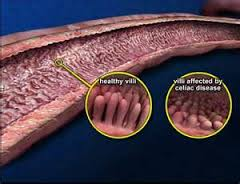
More specifically, when it comes to gluten, I want to share an image that shows the differences between healthy villi that have the surface area and functionality to absorb nutrients, and ones that are glued together and non-functional...which is part of the cause of the bellyaches. Without proper digestion and absorption, food is rotting and fermenting in the gut instead - and that produces gas and other distress that hurts. The image comes from a website you can visit for more information on celiac disease http://celiac.org/celiac-disease/what-is-celiac-disease/ The main point is that the ability of the body to digest is greatly reduced, as shown in the circles. I like this one because it points out that although the villi are small...their numbers are great--they line all the folds of the entire small intestine--

There are a lot of things that can help you to feel better while you are busy starving the wee Candida beasts back to liveable numbers, and into their less damaging circular form. There are also things you can do to help manage the symptoms that can be ugly, while they're dying- such as drinking lots of water, to help get rid of their microscopic carcasses! But first, let's get on with starving them out...then we'll move onto healing the damage they've done.
- skip all sugar...could be tough, but the only way to get rid of them is to starve them (57 Names of Sugar, from Prevention.com...my apologies for including a clicking slide show, but there is a worthwhile blurb about each one...)
- skip chocolate, as I understand it, chocolate can change the acidity in your gut...and they like it that way, so it has to change
- skip gluten, as it's likely that your guts can't handle it well right now, and you'll heal faster this way
- eat veggies, rice, and meat, with very little fruit to start with.
- skip dairy and soy for now, as they often fail to digest well when the Candida albicans (or just Candida) is going crazy, and can give some rollicking bellyaches-even though some recommend it, including the guy I copy below...I prefer to get the cultured goodness from a coconut milk based product.
- also skip the following, as they convert too quickly into blood sugar, feeding the Candida: corn, soy, and anything with gluten, including gluten-free oats (because I just don't know/trust that they don't have gluten and I'm unsure about the way they are processed) so....skip
- forget about processed snacks, processed meats, etc...you're going to be a supernatural being for a while...
- smoothies will be your very good friend - I have lots of recipes on the blog for them, and they're easy to digest.
- green veggies provide antioxidant vitamins for you - they're like a cleaning crew in your body and will help you get better as quickly as you can
- after a while, once you're feeling better, add in very dark berries and cherries (but maybe keep cherries to around 10, so they don't give you bellyaches!!!) Blueberries are excellent, as they're nutritious, and sweet, but they process slowly in your body, which means they don't transform their sugars easily or quickly - and that's good!
- a great source of calories, and a good fat is coconut oil...instead of butter, or anything else. There's a great coconut milk made into "yogurt" that you can turn into breakfast by adding some seeds and letting it sit for a few minutes before you chow down to heal up!
Next steps...while you're killing back the yeast and starving them out
I like this guy's summary for the next step I mentioned--healing and sealing up the gut, from http://draxe.com/4-steps-to-heal-leaky-gut-and-autoimmune-disease/
The 4-Step Plan to Heal Leaky Gut
The good news is there’s a solution to healing leaky gut. There is a four step process that includes:
REMOVE foods and factors that damage the gut
REPLACE with healing foods
REPAIR with specific supplements
REBALANCE with probiotics
Here’s the protocol I have used with my patients over the years that has helped them see incredible results.
Remember, the top foods to remove that cause leaky gut are sugar, grains, conventional meat, conventional dairy and GMO foods. The top toxic exposures to eliminate are tap water, pesticides, NSAIDS, and antibiotics but remember to always consult with your physician if he has prescribed these for you.
The Leaky Gut Diet and 5 Healing Foods

#1 Bone Broth – broth contains collagen and the amino acids proline and glycine that can help heal your damaged cell walls. I’ve had many of my patients do a bone broth fast for 3 days to help rapidly repair leaky gut.
 #2 Raw Cultured Dairy – contains both probiotics and SCFA’s that can help heal the gut. Pastured kefir, yogurt, amasai, butter, and raw cheese are some of the best.
 #3 Fermented Vegetables – contain organic acids that balance intestinal pH and probiotics to support the gut. Sauerkraut, Kimchi, and Kvass are excellent sources.
 #4 Coconut Products – all coconut products are especially good for your gut. The MCFA’s in coconut are easier to digest than other fats so better for leaky gut. Also, coconut kefir contains probiotics that support your digestive system.
 #5 Sprouted seeds – chia seeds, flaxseeds, and hemp seeds that have been sprouted are great sources of fiber that can help support the growth of beneficial bacteria. But if you have severe leaky gut, you may need to start out getting your fiber from steamed vegetables and fruit.
Also, consuming foods that have anti-inflammatory Omega-3 fats are beneficial such as grass-fed beef, lamb, and wild caught fish like salmon.
Top 5 Supplements for Healing Leaky Gut
There are many supplements that support your digestive health but I believe the most beneficial are: L-Glutamine, Probiotics, Digestive Enzymes, Aloe Vera Juice, Quercetin, NAG and Licorice Root.
#1 Probiotics are the most important supplement to take because it helps replenish good bacteria and crowds out bad bacteria. I recommend getting probiotics in both food and supplement form. I see people all the time only follow part of the protocol in healing their gut by removing the damaging irritants. But the part they often leave out is re-inoculating their gut with beneficial bacteria that will keep bad bacteria at bay.
So load up on BOTH probiotic rich foods and take AT LEAST 50 billion units of probiotics daily from a high quality brand.
#2 Digestive enzymes (one or two capsules at the beginning of each meal) ensure that foods are fully digested, decreasing the chance that partially digested foods particles and proteins from damaging your gut wall.
#3 L-Glutamine is critical for any program designed to heal leaky gut. Glutamine is an essential amino acid that is anti-inflammatory and necessary for the growth and repair of your intestinal lining. L-glutamine acts a protector and coats your cell walls, acting as a repellent to irritants. Take 2-5 grams 2x daily.6
#4 Licorice Root (DGL) is an adaptogenic herb that helps balance cortisol levels and improves acid production in the stomach. DGL supports the body’s natural processes for maintaining the mucosal lining of the stomach and duodenum. This herb is especially beneficial if someone’s leaky gut is being caused by emotional stress. Take 500mg 2x daily.
#5 Quercetin has also been shown to improve gut barrier function by sealing the gut because it supports creation of tight junction proteins. It also stabilizes mast cells and reduces the release of histamine which is common in food intolerance. New studies have also shown it’s effectiveness in healing ulcerative colitis. Take 500mg 3x daily with meals.
If you can follow the above protocol you are well on your way to healing your gut for good!
Enjoy even more information related to ‘4 Steps to Heal Leaky Gut and Autoimmune Disease’ with the Signs and Symptoms to look out for.
What Foods, Supplements or Natural Treatments have you found help Heal Leaky Gut?
References:
Kiefer D, Ali-Akbarian L (2004). “A brief evidence-based review of two gastrointestinal illnesses: irritable bowel and leaky gut syndromes”. Alternative Therapy Health Medicine10 (3): 22–30.
Pike, M. G.; Heddle, R. J.; Boulton, P.; Turner, M. W.; Atherton, D. J. (1986). “Increased Intestinal Permeability in Atopic Eczema”. Journal of Investigative Dermatology 86 (2): 101–104.
Humbert, P.; Bidet, A.; Treffel, P.; Drobacheff, C.; Agache, P. (1991). “Intestinal permeability in patients with psoriasis”. Journal of dermatological science 2 (4): 324–326.
Vaarala O, Atkinson MA, Neu J (2008) ‘The “Perfect Storm” for Type 1 Diabetes The Complex Interplay Between Intestinal Microbiota, Gut Permeability, and Mucosal Immunity’, Diabetes Journal, (57)10(2555-2562).
Z Liu, N Li, J Neu (2005) ‘Tight junctions, leaky intestines, and pediatric diseases’, Acta Paediatrica , 94(4), pp. 386-393.
Maes M, Leunis JC (2008) ‘Normalization of leaky gut in chronic fatigue syndrome (CFS) is accompanied by a clinical improvement: effects of age, duration of illness and the translocation of LPS from gram-negative bacteria’, Journal of Neuro Endocrinology, 29(6), pp. 902-10.
Visser, J (2010). Tight Junctions, Intestinal Permiability and Autoimmunity Celiac Disease and Type 1 Diabetes Paradigms. PubMed.
If you can absorb all this, you'll be doing great. It will take a while to get into the swim, but it's truly worth diving in... There's a formulation we used, by Douglas Laboratories, called Ultra MFP Forte that is supposed to help kill off excess yeast in the gut- but as always, check that one out and decide for yourself if you want to use it. I found the InnoVite Yeast Buster was helpful - but I have to add the same caveat, please decide for yourself. I liked it because it had a yeast inhibitor, and the charcoal tabs to "mop up" and absorb some of the compounds that can cause headaches while the yeast die back... I'd ask a nutritional pharmacist to recommend the best no-refrigeration probiotic you can get (we found Zymogen), because the operating idea of replenishing these "good guys" in the 'zoo that is you' is that the more of them there are, the tougher it is for the bad guys (Candida) to keep multiplying is such huge numbers...
As I said, this is a major, yet completely DOable undertaking. If you need encouragement, or want to know if I've heard of something, just send me a comment, or email, and I'll share whatever I've come across! I hope this helps you get started. There are all kinds of recipes, ways of cooking, and stories in other posts; I'll search them out for and pop them into the comments section . For right now...
Cheers and chao!
As I said, this is a major, yet completely DOable undertaking. If you need encouragement, or want to know if I've heard of something, just send me a comment, or email, and I'll share whatever I've come across! I hope this helps you get started. There are all kinds of recipes, ways of cooking, and stories in other posts; I'll search them out for and pop them into the comments section . For right now...
Cheers and chao!

No comments:
Post a Comment